Monday, 17 February 2020

Some Local Wild Flowers - from July and August, 2019

Please note:- This post was updated to correct an incorrect scientific name given for the orchid depicted immediately below. Unfortunately, this has resulted in this post being shown as the latest post to this blog, whereas the post following it is actually the latest post!

The group's Chairman, Brian Hammond, has sent in some photos to give us a retrospective look at some of the more interesting wild flowers he found locally in July and August this year. These include some delightful orchids.

Fragrant Orchid (Gymnadenia densiflora) - Calke Abbey, in July 2019
Common Twayblade (Neottia ovata) - Calke Abbey, in July 2019
Bee Orchid (Ophrys apifera) - Ashby de la Zouch Bypass, in July 2019
Common Hogweed (Heracleum sphondylium) - Ashby de la Zouch Bypass, in July 2019
Yellow Wort (Blackstonia perfoliata) - Ashby de la Zouch Bypass, in July 2019
Common Centaury (Centaurium erythraea) - Ashby de la Zouch Bypass, in July 2019

Gypsywort (Lycopus europaeus) - Calke Abbey, in August 2019
Broad-leaved Heleborine (Epipactis helleborine) - Willesley Wood, in August 2019
Thank you for these, Brian. I'm sure that these places will be investigated again in the summer of 2020!

Thursday, 30 January 2020

Coming Soon To Your Garden?

We are coming to the time of year when some of the 'garden birds' are on the move again. Three of these are gems that tend to be only seen in gardens in these parts from January to March. They are Brambling, Lesser Redpoll, and Siskin. We're lucky in our small suburban garden in Ashby de la Zouch in that I cannot remember a year when we have not had all three. 

Brambling seems to arrive any time from early January to early March, and often hangs around for days - sometimes weeks! This one visited on 11th January and stayed for just two days.

Brambling (Fringilla montifringilla) - Ashby de la Zouch on 12th January, 2020
We have not yet had Lesser Redpoll visit this year, but I'm hoping that we will see some soon. They usually arrive any time from the end of December to the middle of March. Here's one from last year.

Lesser Redpoll (Acanthis cabaret) (male) - Ashby de la Zouch on 6th January, 2019
Nor have we had Siskin yet this year. They're usually a bit later, usually arriving some time between mid February and mid-March, and staying later than the previous two. This one is also from last year.
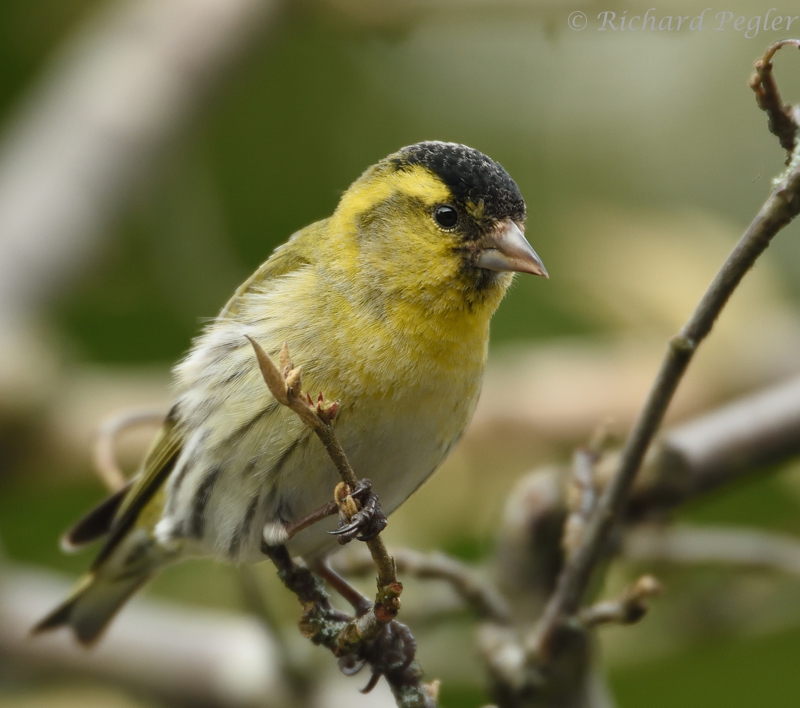
Siskin (Spinus spinus) (male) - Ashby de la Zouch on 18th April, 2019
If you would like to attract these birds to your garden, all three will come to sunflower hearts, and seem to prefer them in open trays rather than suspended tubular feeders. 

If you are feeding birds - and I hope you are - please remember to keep the feeders clean. Finches, in particular, are susceptible to a disease of the legs and feet which eventually destroys their feet, and this is thought to be transmitted through unhygienic feeders.
 

Thursday, 14 November 2019

NOVEMBER 14th MEETING RESCHEDULED TO 28th NOVEMBER DUE TO FLOODING

Following the cancellation at short notice of the meeting on November 14th our Chairman, Brian, has rescheduled the meeting to be on November 28th - details on the 'Meetings Programme' page.

Thursday, 31 October 2019

Look Out For Winter Visitors!

Yesterday (30th October) we had our first Brambling of the winter visiting our garden. There were two of them.

If you feed the birds in your garden, or if you have trees with berries, the birds that visit in winter are now arriving in good numbers, and it's time to look out for them, and maybe supplement what you normally have on offer. Birds such the thrushes (Fieldfare, Redwing, Song Thrush, and even Blackbird) will probably be grateful for half-apples left on the ground or stuck on the ends of branches or canes. Siskin, Brambling, and Lesser Redpoll will appreciate sunflower hearts.

Brambling (Fringilla montifringilla) - Ashby de la Zouch garden on 30th October, 2019

Friday, 25 October 2019

Black Slip Wasp

Group member Katherine Moore has found a Black Slip Wasp and sent a photo. This fierce-looking ichneumonid is parasitic, laying its eggs in the caterpillars of butterflies and moths. This one is a female and the 'spike' on the tail-end of the abdomen is an ovipositor, rather than a sting. It is a species mainly seen in the autumn.

Black Slip Wasp (Pimpla rufipes) (female) - Blackfordby garden

Friday, 18 October 2019

Painted Lady


Here's an image of a Painted Lady (under wing), taken here in Blackfordby earlier this year.

They really are lovely visitors.

Spreading northwards to the UK and Ireland from the desert  of North Africa and the Middle East, in some years they are abundant, frequenting gardens and other flowery places in late sum They feed on thistles, mallow and common or garden nettles.


David Tideswell's Garden Bird Goo Recipe

On Thursday 17th October, the group was treated to an excellent talk (informative, and highly entertaining!) by David Tideswell on 'Garden Birds in Autumn and Winter'. In that talk, David mentioned his home-made 'Log Goo' - greatly enamoured by birds. Afterwards, it was suggested by several members that, with David's permission, the recipe for his goo be published here - well here it is!


Thank you again, David, for the recipe and for a wonderful and inspiring talk!